Investment Trends in Times of Economic Uncertainty
Understanding Investment Trends
In an unpredictable financial landscape, understanding investment trends becomes essential for both novice and seasoned investors. Economic uncertainty can create both challenges and opportunities, influencing how individuals allocate their resources. As we navigate these turbulent waters, awareness of current trends can empower smarter investment choices.
Several key factors often shape investment behavior during uncertain times, each carrying its own implications for investors:
- Market volatility: Fluctuations in stock prices can lead to increased anxiety among investors. For instance, significant drops in the stock market, as witnessed during the COVID-19 pandemic, often lead investors to reconsider their strategies. Many individuals sell off stocks in panic, locking in losses instead of allowing their investments to recover over time.
- Changing interest rates: Adjustments by the Federal Reserve profoundly impact borrowing costs and savings returns. A rise in interest rates, for example, can make mortgages more expensive, dissuading home purchases, while simultaneously offering better returns on savings accounts and fixed-income investments.
- Global events: Political upheaval, trade disputes, or natural disasters can significantly affect market performance. For example, the trade tensions between the U.S. and China not only influenced specific sectors but also caused widespread concern across financial markets, leading to sell-offs and increased volatility.
In times of economic uncertainty, many investors seek refuge in stable asset classes. These alternatives are often seen as safer options to protect capital and ensure potential growth:
- Bonds: Generally regarded as safer investments, especially during market downturns. For example, U.S. Treasury bonds are considered one of the safest investments because they are backed by the full faith and credit of the U.S. government, making them a preferred choice for risk-averse investors.
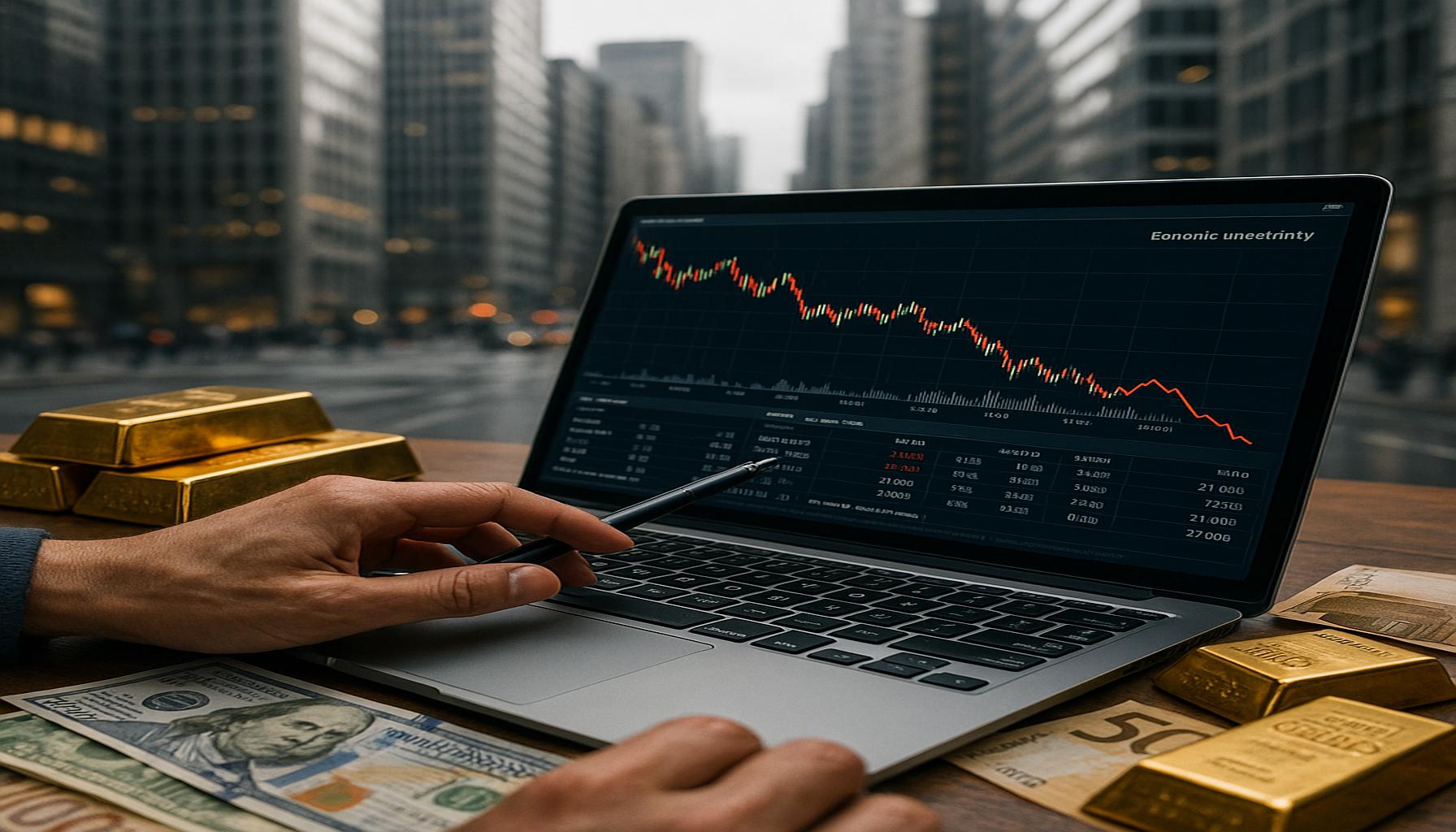
- Gold: Often viewed as a hedge against inflation and currency fluctuations. During uncertain times, like the recent spikes in inflation rates, many investors flock to gold, driving up its price as they seek to preserve their wealth.
- Real estate: A tangible asset that may provide both income from rents and appreciation over time. Properties can appreciate in value even during economic downturns, and owning real estate can serve as a buffer against market volatility, offering stability through rental income.
Identifying and adapting to these trends is crucial for cultivating a resilient investment portfolio. By staying informed about market conditions and considering various asset classes, investors can better navigate the complexities of the economic landscape. Turning potential risks into strategic advantages requires keen awareness and flexibility, allowing investors to adjust their strategies as market conditions evolve. Ultimately, an informed investor can not only weather financial storms but also find opportunities for growth even in turbulent times.
DISCOVER MORE: Click here to learn how to apply
Investment Strategies in Uncertain Economic Times
As investors face shifting market landscapes, understanding how to effectively manage portfolios becomes increasingly important. When economic uncertainty looms, traditional investment strategies may require a reevaluation. This portion of the article will examine how investor behavior adapts in response to changing financial climates and highlight practical strategies for capitalizing on investment trends.
One notable observation during periods of economic uncertainty is a shift in investor sentiment towards risk aversion. Investors may gravitate towards more conservative assets, prioritizing stability over higher returns. This often leads to the following shifts in investment allocations:
- Increased allocation to secure assets: In a climate of unpredictability, assets such as U.S. Treasury bonds and high-grade corporate bonds may see an uptick in demand. Investors typically favor these instruments due to their lower risk profiles and perceived reliability.
- Preference for dividend-paying stocks: Stocks that offer consistent dividends can appeal to investors seeking income and stability. Even during downturns, companies with solid dividend tracks often impress their shareholders by providing a steady income stream, which can be more appealing than the uncertain prospects of growth-oriented stocks.
- Emergence of defensive sectors: Industries that supply essential goods and services, such as utilities, healthcare, and consumer staples, often perform better when economic conditions deteriorate. Investors may shift towards these sectors during times of uncertainty in search of greater resilience in their portfolios.
Alongside these shifting allocations, understanding the broader economic indicators also plays a crucial role in selecting investments. Keep in mind the following factors:
- Inflation rates: Inflation can erode purchasing power, making it imperative for investors to consider assets that outpace inflation. This has led to increased interest in commodities and real estate, which often provide better returns during inflationary periods.
- Employment statistics: High unemployment rates and job insecurity can influence consumer spending, which in turn impacts overall economic growth. Investors closely monitor these trends to gauge the potential health of various sectors.
- Consumer confidence indices: When consumer confidence wanes, spending typically slows, leading to reduced corporate earnings. Investors should pay attention to these surveys as they can signal upcoming market trends.
By grasping these shifts in investment behavior, individuals can tailor their strategies to better align with current market conditions. Remaining adaptable and informed not only aids in weathering economic turbulence but also provides opportunities to seize market inefficiencies. Recognizing how investment trends evolve during economic uncertainty equips investors with the necessary tools to build resilient portfolios capable of navigating challenges and embracing prospects for long-term growth.
DISCOVER MORE: Click here to learn how to apply
Identifying Opportunities Amidst Challenges
While economic uncertainty can breed caution, it also presents unique opportunities for astute investors. By honing in on particular trends and strategies, individuals can navigate the stormy waters of volatile markets and potentially benefit from the shifts that accompany changing economic tides. Let’s explore some means to identify these opportunities during turbulent times.
One of the most critical aspects of investing during economic uncertainty is the focus on value investing. In a time when markets are experiencing volatility, many good companies may see their stock prices unjustly depressed, creating a potential buying opportunity. Investors adopting a value investment strategy look for fundamentally strong companies trading below their intrinsic value. This method involves careful research and analysis, ensuring that investors are well-informed before making purchases. For instance, if a well-established company with a strong balance sheet experiences a temporary downturn due to economic factors, savvy investors may see this as a chance to acquire shares at a discount.
Exchange-Traded Funds (ETFs) can also offer unique opportunities in uncertain times. With the ability to invest in a diversified portfolio without having to purchase each individual stock, ETFs can provide exposure to various sectors, including those that may perform well in an economic downturn. For example, an ETF focused on healthcare or essential consumer goods allows investors to indirectly participate in industries that are less sensitive to economic cycles, thus mitigating risk while still optimizing returns.
Investing in Gold and Precious Metals
The behavior of investors during economic uncertainty often leads to a resurgence in the popularity of gold and other precious metals. These assets are historically seen as safe havens because they tend to retain value when market conditions worsen. Investors often flock to gold as a hedge against inflation and currency fluctuations. It’s worth noting that during times of high inflation and uncertain economic forecasts, prices for these metals can soar, presenting both a refuge for cautious investors and an opportunity for those looking to capitalize on commodity movements.
Technology and Innovation Investments
While defensive sectors like utilities are often preferred in uncertain times, technology investments can provide significant growth potential even amid economic challenges. Many tech companies, particularly those focused on digital transformation, e-commerce, and remote work solutions, have thrived in response to changing consumer behaviors during downturns. For instance, companies offering cloud computing solutions or cybersecurity services have become indispensable as more businesses operate online. Recognizing these growth trends ahead of the curve can create potentially lucrative investment opportunities.
Impact Investing and Sustainable Options
Another emerging trend is the rise of impact investing and sustainable investing practices. As awareness about social responsibility and environmental issues increases, companies that prioritize sustainability often see their long-term value improve. Investors can capitalize on this trend by focusing on companies that emphasize sustainability and ethical practices, positioning themselves not only for potential financial returns but also for contributing to positive societal change. For instance, funds specializing in renewable energy sources or sustainable agriculture can lead to investments that not only withstand economic upheaval but thrive in a changing world.
By staying alert to these opportunities and understanding how they fit within the broader economic context, investors can develop strategies that are not just reactive but also proactive. Identifying the right trends and sectors to focus on during uncertain times can differentiate between surviving the storm and thriving in new conditions.
DISCOVER MORE: Click here to learn how to apply
Conclusion
In conclusion, navigating the investment landscape during economic uncertainty requires a keen understanding of market dynamics and a proactive approach. While many investors may feel compelled to retreat, the ability to identify opportunities in challenging times can turn uncertainty into a competitive advantage. By adopting strategies such as value investing, diversifying through ETFs, and exploring safe havens like gold and precious metals, individuals can position themselves for potential gains even when market volatility looms large.
Moreover, sectors that emphasize technology and innovation present compelling growth prospects, as these industries often adapt and thrive in changing economic conditions. As society becomes increasingly focused on sustainability, embracing impact investing allows investors not only to seek financial returns but also to contribute positively to the world around them. By fostering an awareness of these evolving trends, individuals can construct investment portfolios that are resilient and forward-thinking.
Ultimately, the key to success in uncertain times lies in preparedness and adaptability. Investors who remain informed, recognize shifting market patterns, and align their strategies with these insights can not only weather the storm but also emerge richer in opportunities. With a thoughtful approach, economic uncertainty can indeed catalyze innovation and growth in one’s investment journey.